Plantar Fasciitis
Chronic heel pain that hasn't responded to stretching, orthotics, and rest.
Shock Wave Therapy delivers focused acoustic energy into tissues that have stalled in their recovery. It is one of the most evidence-supported, drug-free treatments in modern physiotherapy, used for chronic tendinopathy, post-surgical scarring and stubborn musculoskeletal pain.
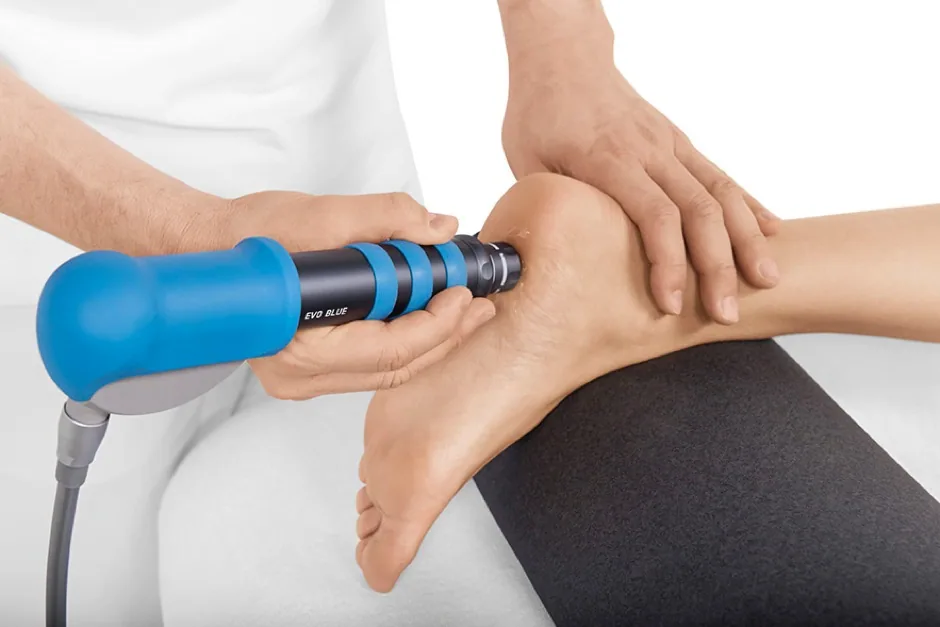
Extracorporeal Shock Wave Therapy, known clinically as ESWT, is a non-invasive treatment that delivers high-energy acoustic pulses through the skin into deeper tissue layers. The pulses trigger a biological cascade: increased blood flow, breakdown of calcific deposits, stimulation of collagen formation, and disruption of chronic inflammation cycles.
In simpler terms: when a tendinopathy or stubborn injury has been stuck for months despite rest, exercise and physiotherapy, the body has often given up on healing it. ESWT is a controlled disturbance that prompts the body to start healing again.
The technology has been used clinically since the 1990s and is one of the most studied non-surgical interventions in musculoskeletal medicine. It is not a miracle cure, and it is not appropriate for every pain, but for the right conditions, it is remarkably effective.
At Cerebron, ESWT is used as part of a wider treatment plan, not as a one-off shortcut. A typical course is 4–6 sessions over six weeks, alongside continuing physiotherapy.
The mechanism is well-documented. The right cases are the ones that respond.
A probe rests on the skin over the affected tissue. The device generates focused acoustic waves, sound energy at a specific frequency and depth, that pass through the skin into the tissue beneath. No incision. No injection.
The acoustic energy causes microscopic mechanical disruption in the target tissue. It isn't damage, it's signal. The body responds by increasing blood flow, dispatching healing cells, and restarting a repair cycle that had stalled.
For calcific tendinitis specifically, the shock waves fragment calcium deposits, allowing the body to reabsorb them, often resolving pain that has persisted for months.
Chronic pain often becomes self-sustaining at the nervous-system level. ESWT can disrupt these chronic pain signals, allowing the area to recalibrate.
Highly effective for some conditions. Not appropriate for others. The first session is diagnostic.
Chronic heel pain that hasn't responded to stretching, orthotics, and rest.
Lateral or medial epicondylitis, chronic tendon pain at the elbow.
Chronic shoulder tendon pain, with or without calcific deposits.
Calcium deposits in shoulder or other tendons causing chronic pain.
Chronic Achilles tendon pain not resolving with conservative therapy.
Stubborn scar tissue limiting movement or causing pain after surgery.
Stubborn trigger points causing referred pain in chronic cases.
Built into your wider plan. Tolerable, brief, and tracked across a typical six-week course.
If yours isn't here, send a message, Dr. Shikha's team replies personally, usually within one working day.
Recovery is hard. Regret is harder.
Bring your scans, reports and history. Dr. Shikha will evaluate the area and tell you honestly whether shock wave therapy fits, and what a realistic course of treatment looks like.