
Post-Stroke Balance Recovery
Hemiparetic patients re-learning to bear weight evenly and respond to balance challenges.
The Virtual Balance System Pro is a force-plate platform with real-time visual feedback. It measures postural sway, weight distribution and balance recovery in millimetres and milliseconds, turning the invisible work of staying upright into trainable, trackable data.
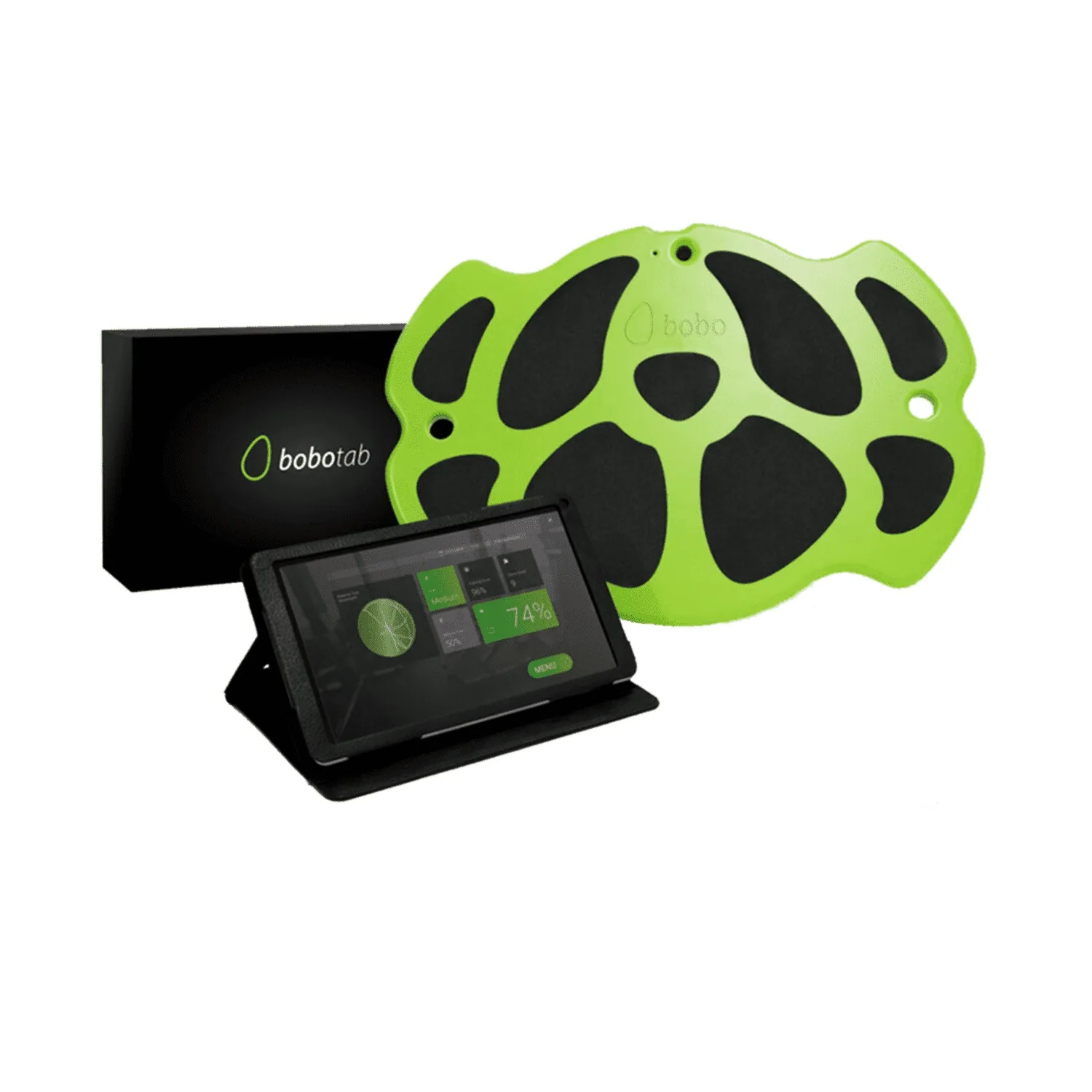
The Virtual Balance System Pro is a clinical balance platform, a force-sensing floor plate connected to a screen, that measures everything the body does to stay upright. Where most therapists assess balance by watching a patient stand, this system measures it: how much weight is on each foot, how the patient sways forwards or backwards, how quickly they recover when nudged.
The patient sees their own balance live on a screen, a small marker representing their centre of gravity, drifting and correcting in real time. For most patients, this is the first time they have actually seen their balance, rather than felt it.
The system is used for two purposes: assessment and training. As assessment, it produces objective, repeatable measurements no observational test can match. As training, it gives patients visual feedback that makes balance work intuitive, they can see what 'centred' looks like, and learn to find it.
For post-stroke, post-surgical, geriatric and paediatric patients, the system turns guesswork into measurement, and measurement into recovery.
Four data streams turn a fuzzy clinical impression into a measurable trajectory.
The force plate detects every millimetre the patient sways, forward, back, side to side, and records sway amplitude, frequency and pattern. Healthy patients sway less. Patients at risk of falling sway more, often in characteristic patterns.
After a stroke or surgery, patients usually shift weight off the affected side without realising. The system shows this on screen, in real time, and trains them to redistribute weight evenly, the foundation of safe walking.
Programmable balance challenges, visual targets, controlled perturbations, train the patient to recover from imbalance under safe conditions. This is the skill that prevents real-world falls.
Every metric is logged. Week 1 sway versus week 8 sway. Pre-treatment versus post-treatment fall-risk score. The improvement is visible, to the patient, to Dr. Shikha, and to the family.
Used widely across patient groups, with strong evidence for fall prevention and post-injury recovery.
Hemiparetic patients re-learning to bear weight evenly and respond to balance challenges.
Inner-ear or central vestibular dysfunction needing targeted balance retraining.
Older adults at risk of falling, or recovering after one, building measurable balance reserve.
After knee, hip or spinal surgery, when proprioception must be restored alongside strength.
Patients with balance complications after head injury or concussion.
Children with coordination, CP, or developmental balance challenges.
Built into your wider programme, never bolted on. Numbers tracked, progress visible.
If yours isn't here, send a message, Dr. Shikha's team replies personally, usually within one working day.
Recovery is hard. Regret is harder.
Book an assessment with Dr. Shikha. The first visit can include a baseline reading on the Virtual Balance platform, a 30-minute test that gives you data, not just a clinical impression.